
Profile and facial balance
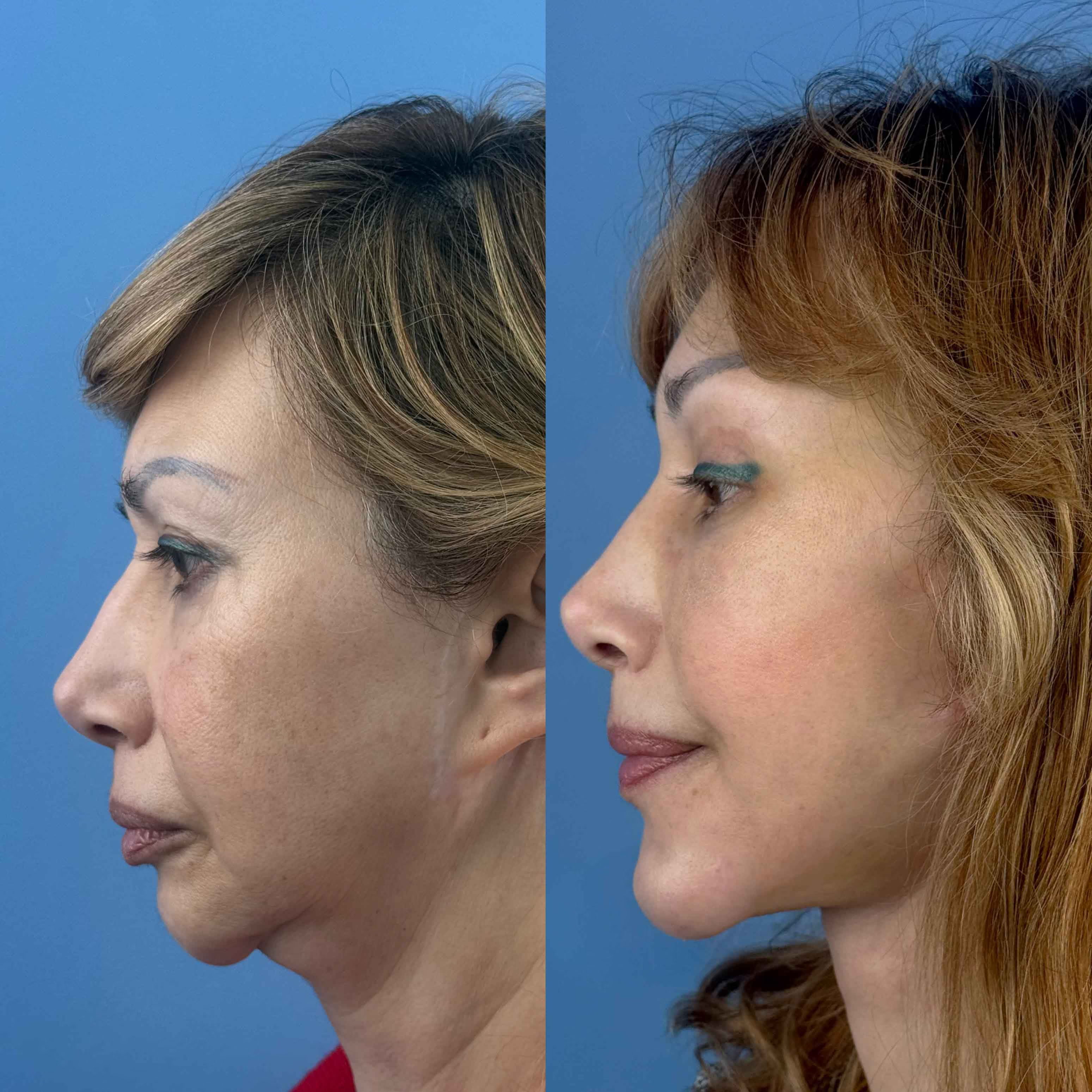
Facial contouring may include chin augmentation, fat grafting or selected soft-tissue procedures to improve balance between the nose, lips, jawline and neck. It can refine proportion, but it cannot guarantee perfect symmetry, reproduce a filtered image or correct every skeletal or bite-related concern.
A chin implant may improve a weak profile, the apparent prominence of the nose and jawline definition. Implant width, projection and position are selected according to facial width, dental relationship, neck anatomy and soft-tissue thickness. Significant bite or jaw discrepancies may require orthodontic or maxillofacial assessment instead.
Fat grafting can restore selected areas of volume loss, including the cheeks, temples and eyelid-cheek junction. Some transferred fat is naturally absorbed, so retained volume varies and additional treatment may occasionally be considered. It does not tighten substantially loose skin.
Suitable candidates are healthy adults with a specific anatomical concern and realistic expectations. Planning reviews facial symmetry, bite, chin and jaw projection, neck anatomy, skin quality, previous fillers and operations. Photographs and video allow a preliminary virtual assessment, but the definitive recommendation requires in-person examination in Yerevan. International patients should arrive before surgery for examination and testing and usually remain locally for approximately 7–10 days, depending on the procedure.
Early recovery may include swelling, bruising, firmness and temporary numbness. Contours refine as swelling settles over the following weeks and months. Chin-implant risks include infection, displacement, asymmetry, visible edges, altered sensation, bone remodeling and possible removal or replacement. Fat-grafting risks include irregularity, asymmetry, cysts, calcification and under- or over-correction. Healing and tissue behavior limit the precision of every result.
Send front, profile and three-quarter photographs with information about dental or bite concerns, previous fillers and the changes you would like to discuss. Relevant chin-augmentation and facial-contouring cases can also be reviewed in the Before & After gallery.
Medically reviewed by Dr. Telman Arakelyan, plastic and maxillofacial surgeon. Last reviewed: July 2026. Treatment selection requires clinical examination and individualized planning.