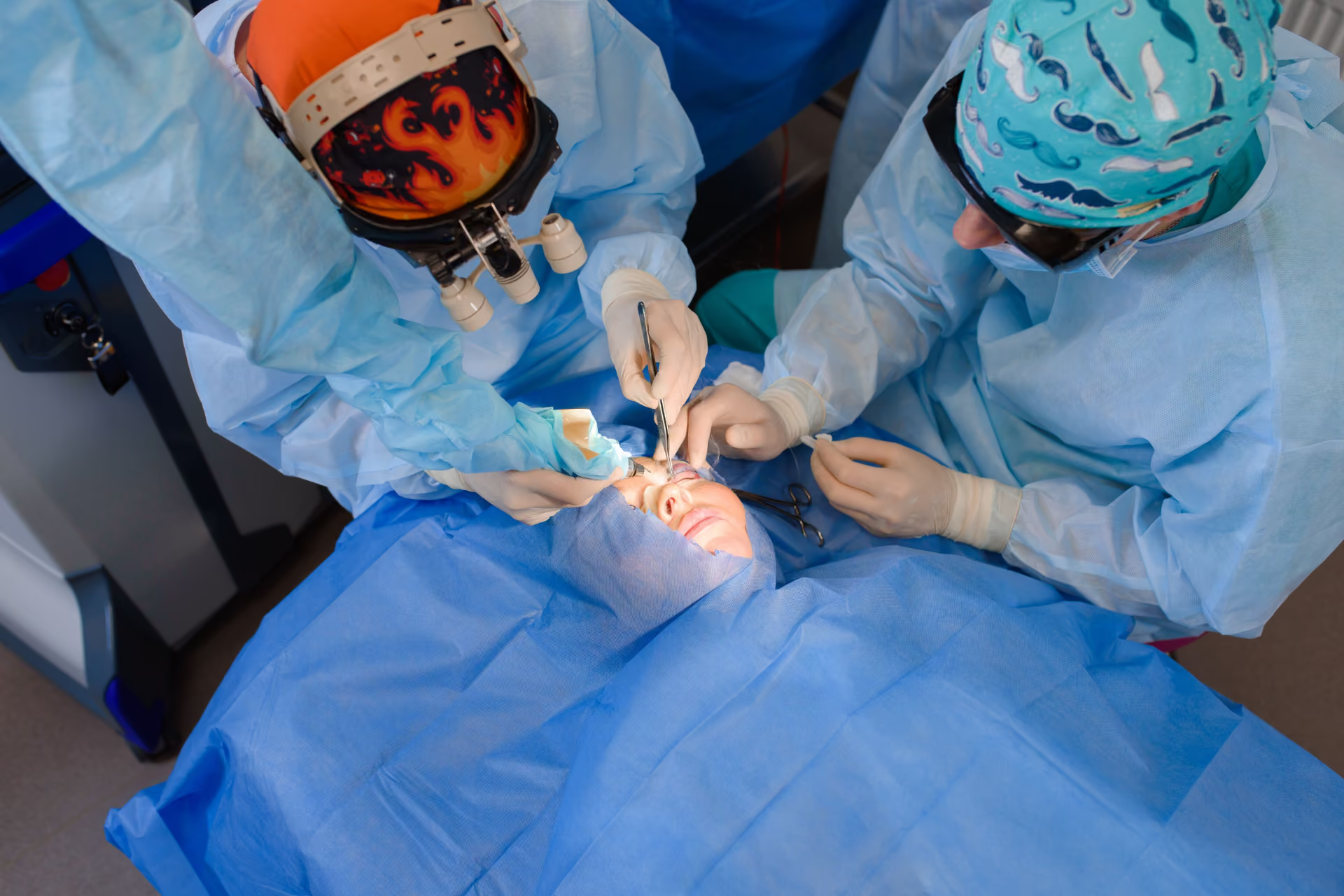
Ear reshaping surgery
Otoplasty can reduce ear prominence, reshape selected cartilage features and improve balance between the ears. The plan considers ear size, natural folds, relationship to the head and the fact that exact symmetry cannot be guaranteed.
Suitable candidates have stable concerns, realistic expectations and health appropriate for elective surgery. Planning assesses cartilage shape, skin quality, ear size, asymmetry, previous trauma or surgery and scar history. Technique may include cartilage scoring, sutures, limited cartilage removal or a combination. Photographs allow a preliminary virtual assessment, but final planning requires in-person examination.
A protective dressing or headband may be recommended. Swelling, bruising, tenderness and temporary sensory changes are expected. Pressure, impact and activities that bend the ears should be avoided during early healing. International patients should arrive before surgery for examination and testing and usually remain in Yerevan for approximately 7–10 days, with travel confirmed after postoperative review.
Possible complications include bleeding, infection, delayed healing, visible or thickened scars, cartilage irregularity, asymmetry, over- or under-correction, recurrent prominence, skin compromise and possible revision surgery. Cartilage has elastic memory and may change during healing. Exact symmetry and a specific final angle cannot be guaranteed.
Send front, rear and side photographs with the hair away from the ears, together with information about previous surgery, trauma and scar problems. Relevant otoplasty cases can also be reviewed in the Before & After gallery.
Medically reviewed by Dr. Telman Arakelyan, plastic and maxillofacial surgeon. Last reviewed: July 2026. Final technique and suitability require clinical examination.