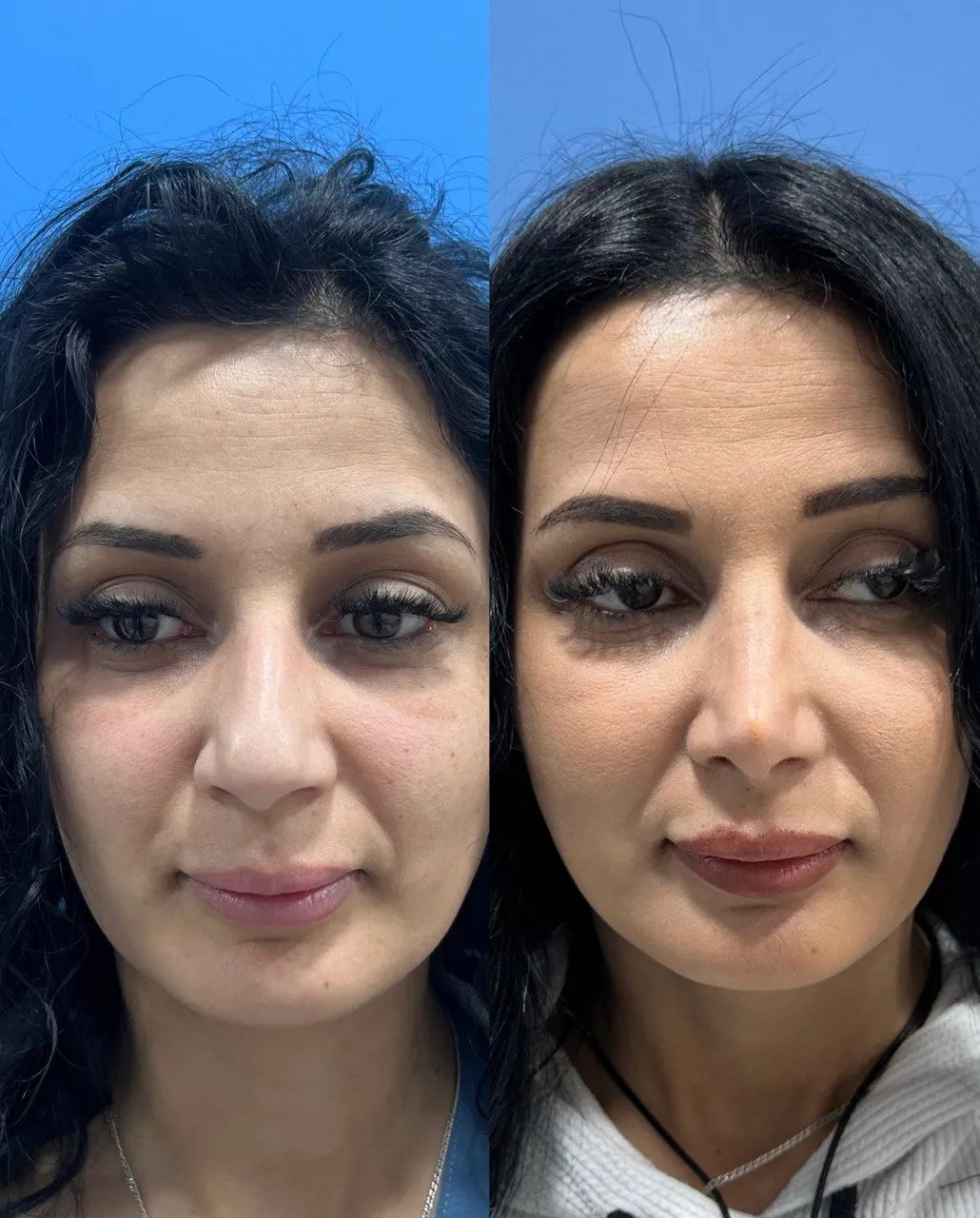
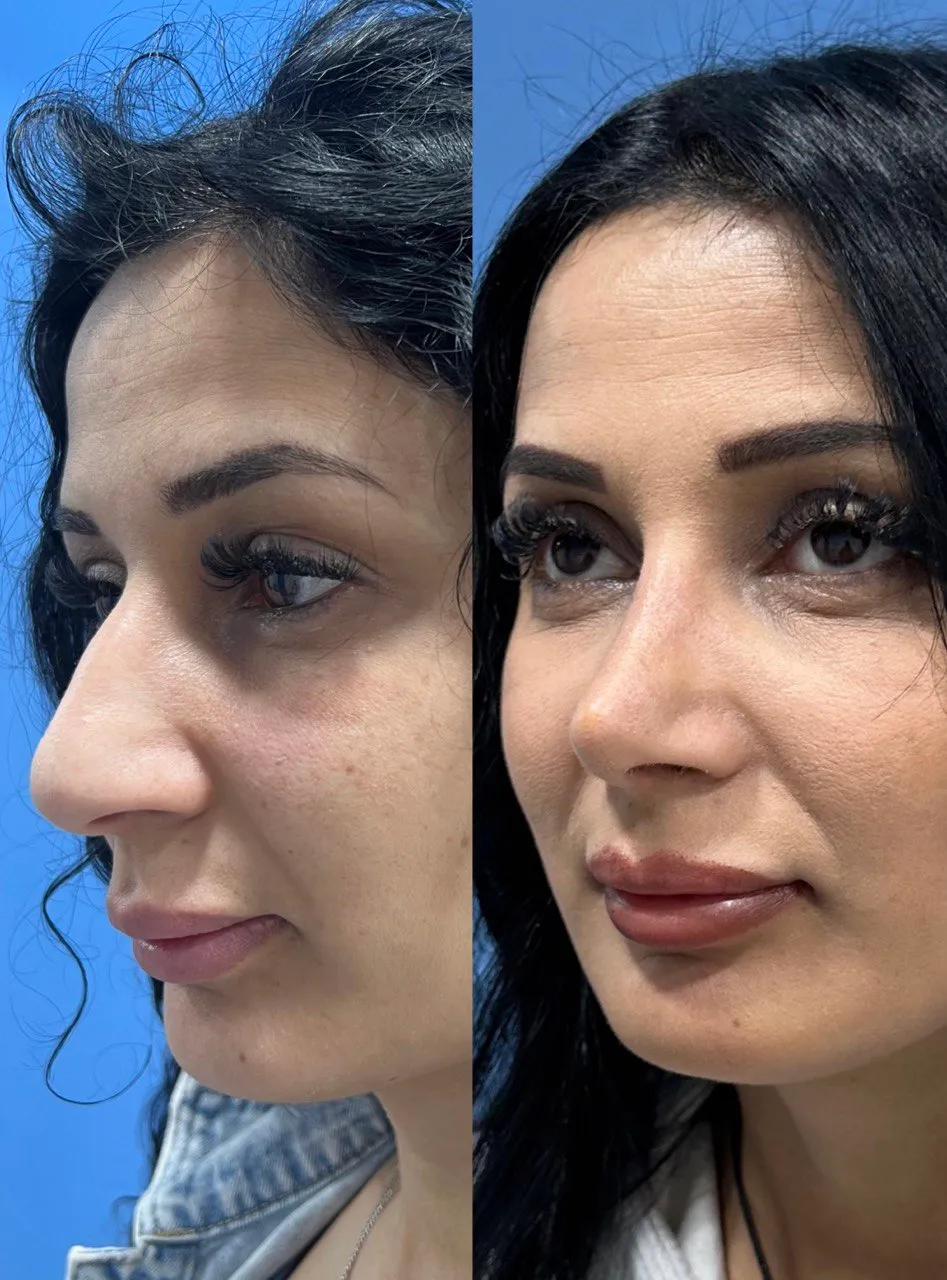
Aesthetic and functional nasal surgery
Rhinoplasty planned for the whole face, not the nose in isolation
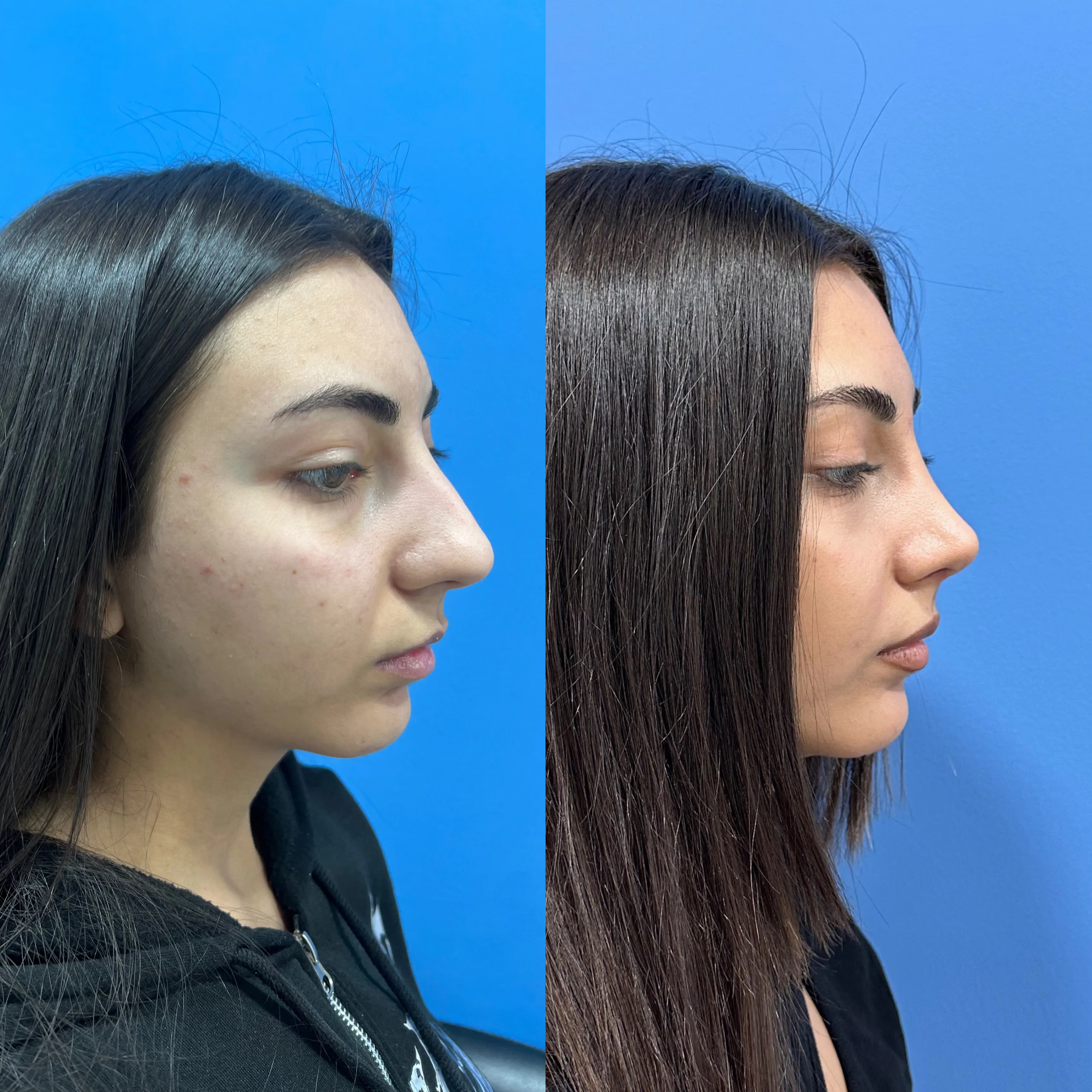
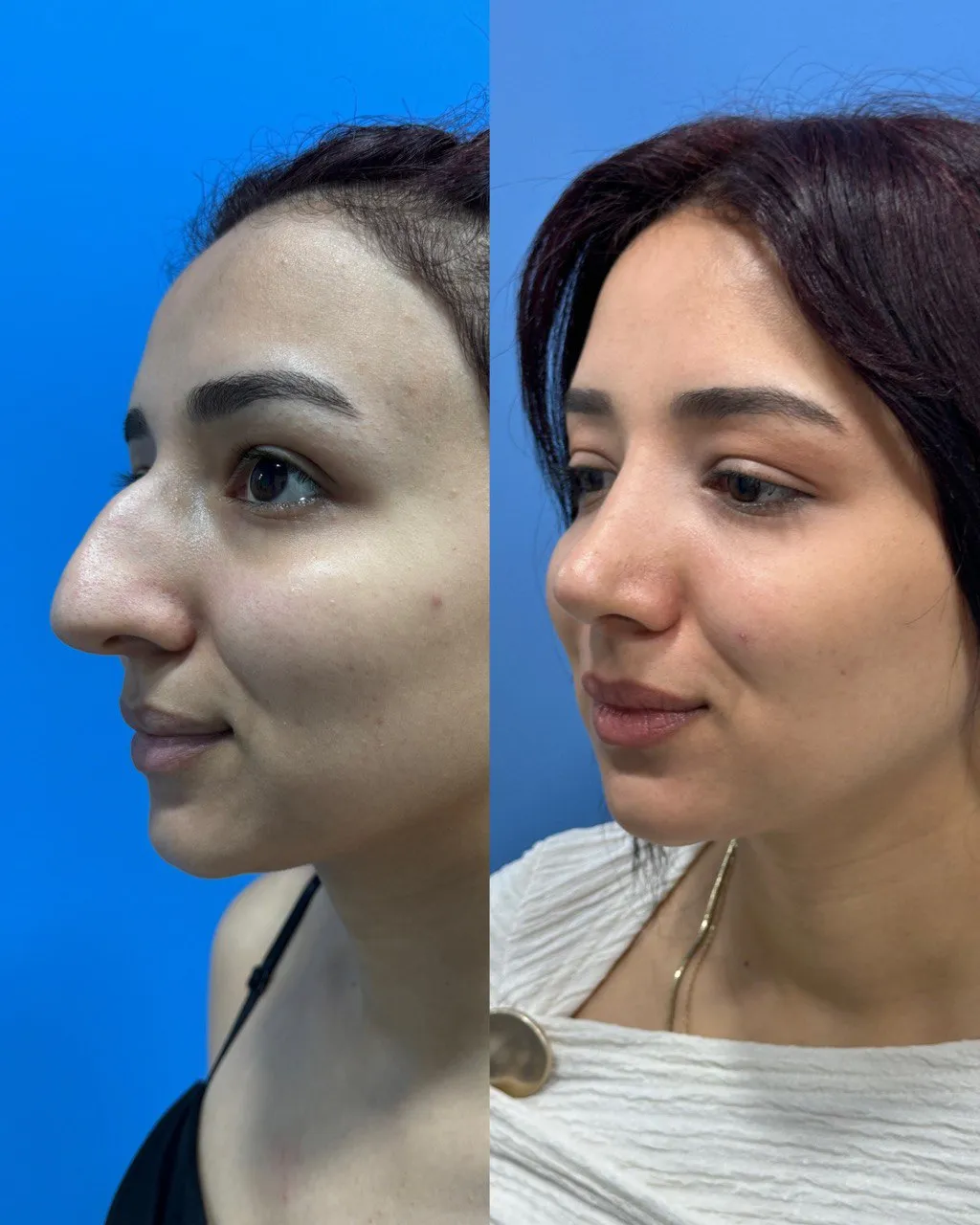
Rhinoplasty can change nasal shape, proportion and support while also addressing selected causes of nasal obstruction. The objective is not to reproduce one fashionable nose, but to develop a plan that respects facial structure, skin thickness, ethnicity, breathing and the patient’s priorities.
Concerns commonly discussed
- Dorsal hump or an irregular nasal profile
- A broad, drooping, under-projected or over-projected tip
- Nostril asymmetry or excessive width
- A nose that appears too long, short, wide or narrow for the face
- Post-traumatic change or previous unsatisfactory surgery
- Nasal obstruction related to septal or structural problems
Your consultation
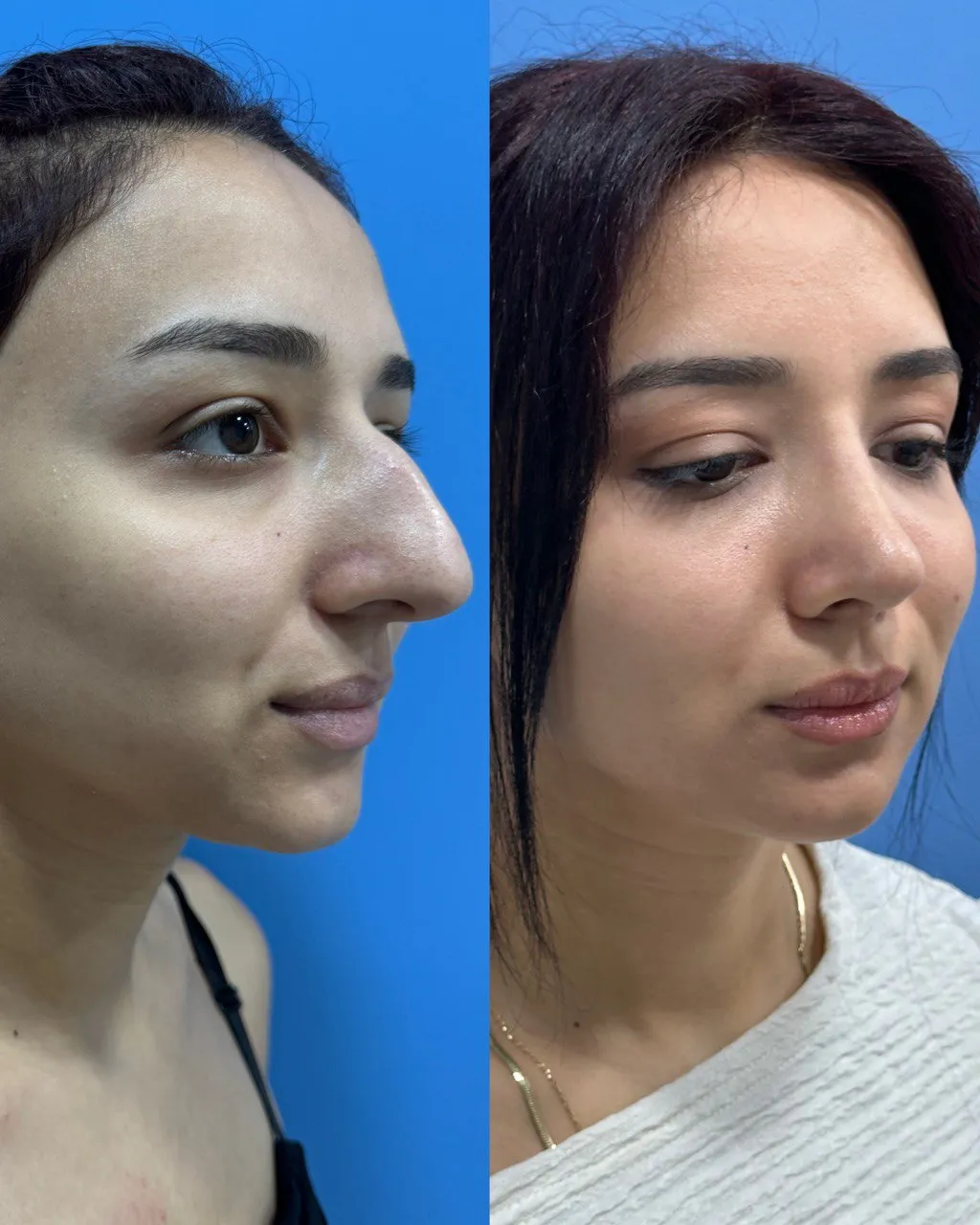
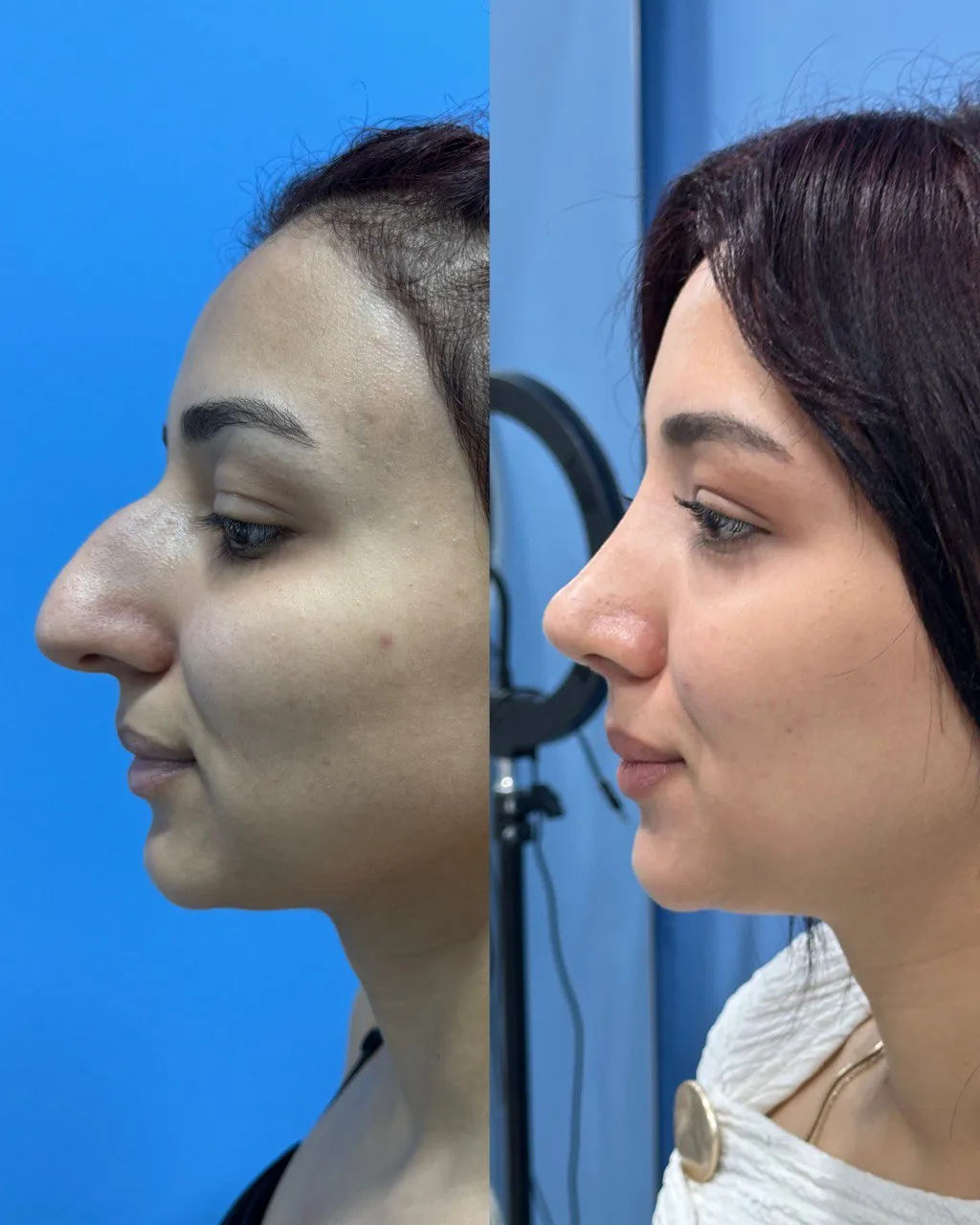
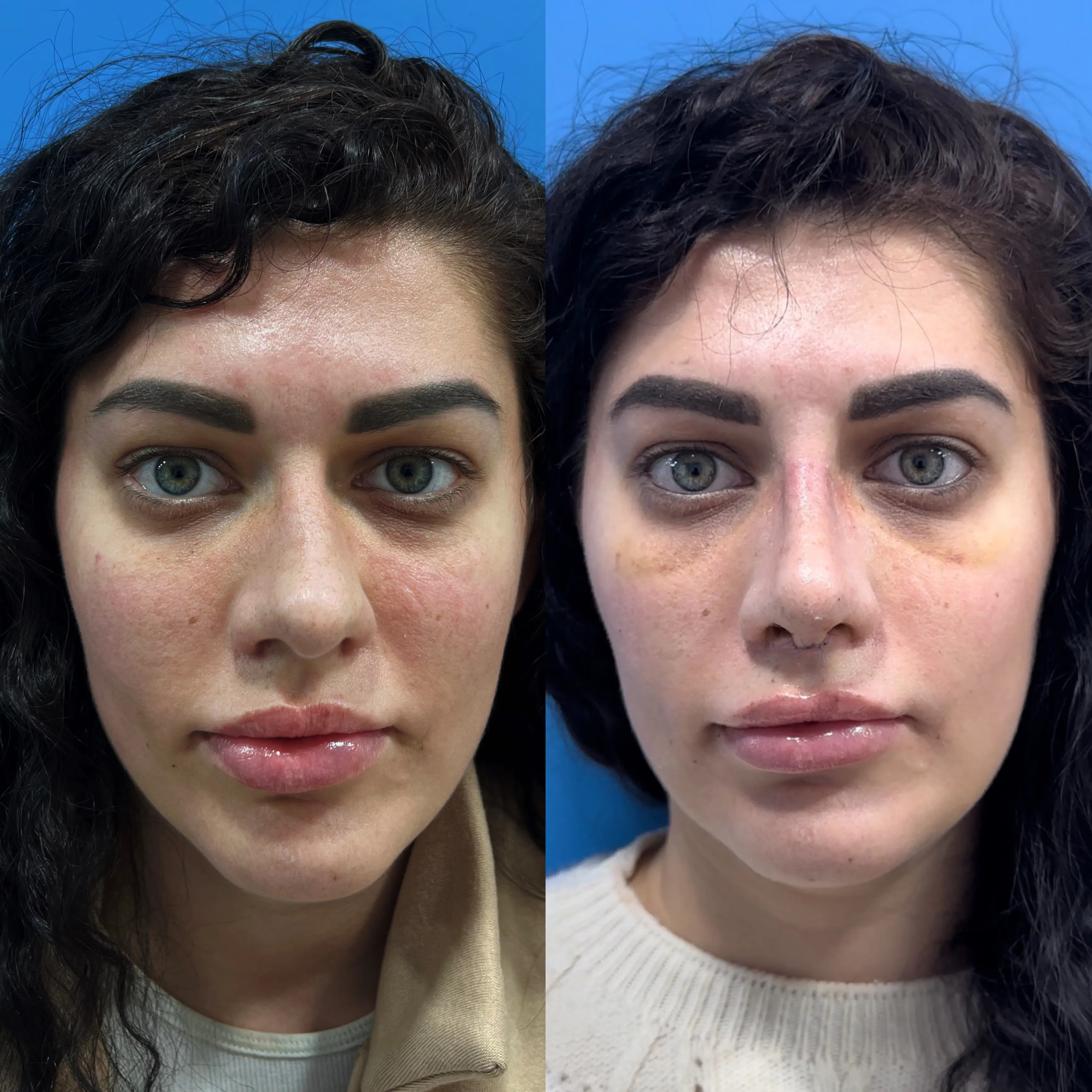
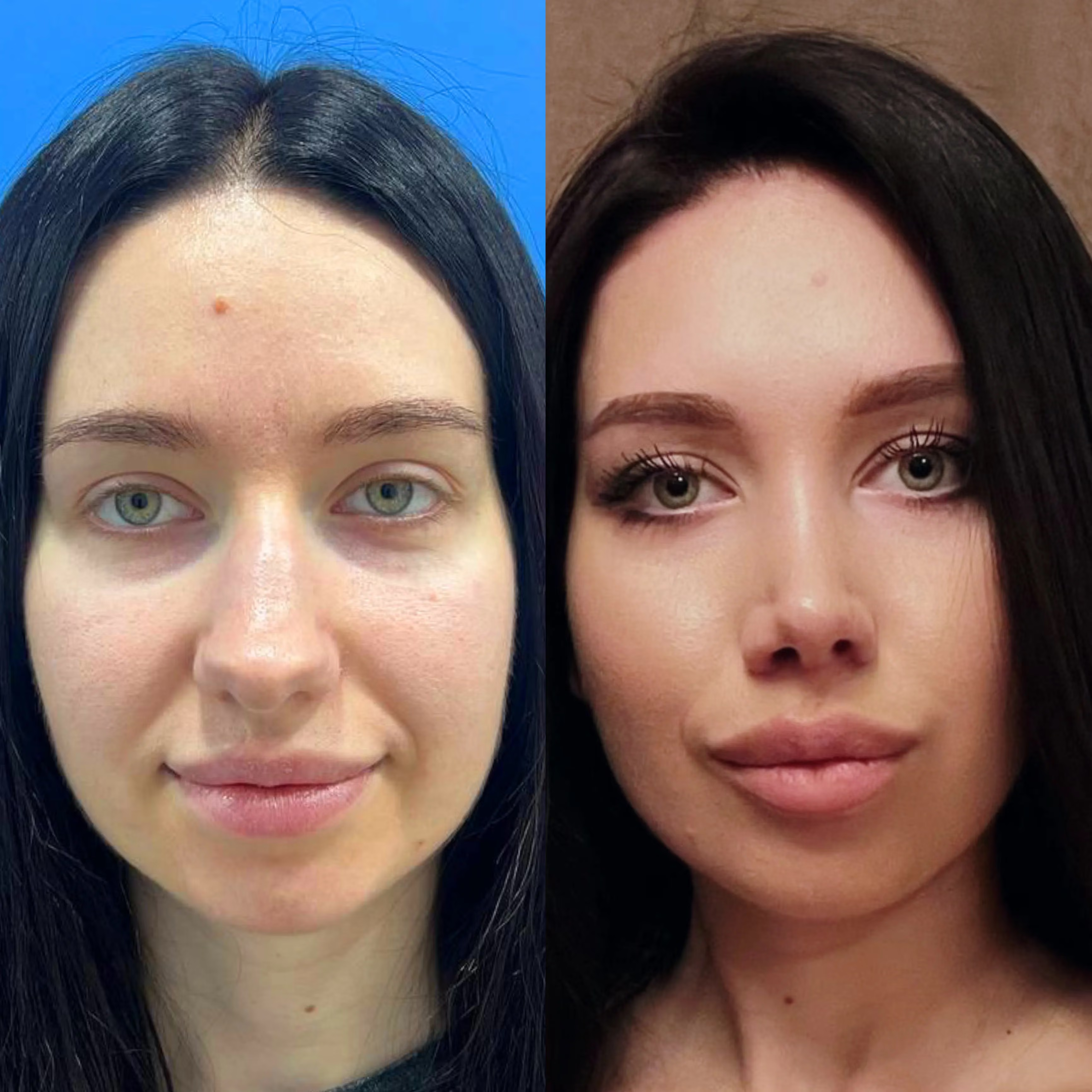
Assessment includes the front, profile, three-quarter and base views, together with skin quality, cartilage strength, septal position, breathing symptoms and prior surgery. Digital modeling may be used as a communication tool, but it is not a guarantee of the final result.
Thick-skin versus thin-skin planning
Thicker skin
- Can soften the visibility of small underlying irregularities
- May limit how sharply very fine tip definition becomes visible
- Often retains tip swelling for longer
- Usually requires strong, stable cartilage support rather than excessive reduction
Thinner skin
- Shows cartilage shape and small contour changes more clearly
- May reveal minor irregularities that thicker skin would conceal
- Requires especially precise smoothing, graft placement and symmetry control
- Can show definition earlier, although final healing still takes time
Neither skin type is better or worse. Skin thickness changes the surgical strategy, the realistic degree of refinement and the speed at which the result becomes visible.
Aesthetic and functional planning
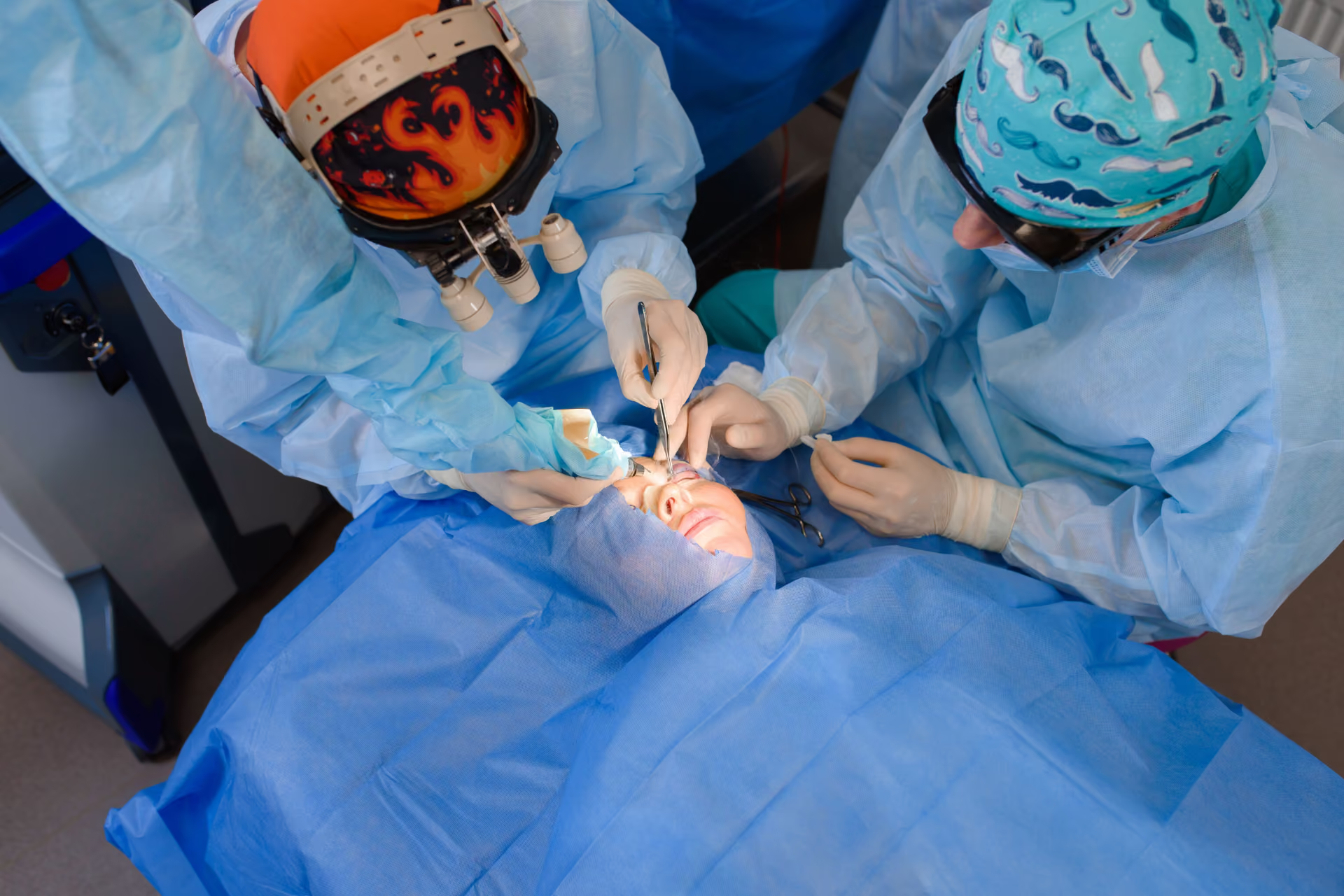
Changes to the nasal tip usually affect the relationship with the bridge, nostrils and upper lip. For this reason, isolated tip work is not always the most harmonious option. The plan may include refinement of the tip, adjustment of the bridge, osteotomies, septal correction, structural grafting or nostril-base treatment according to anatomy.
Patients reporting obstruction are asked about the side, duration, variability and previous treatment. Additional examination or imaging may be advised when sinus disease, trauma, severe septal deviation or previous surgery is suspected.
When specialist functional evaluation or CT may be needed
CT imaging is not routinely required for cosmetic rhinoplasty alone. Additional functional assessment may be appropriate when symptoms or examination suggest a problem beyond external nasal shape.
- Persistent or one-sided nasal obstruction
- Suspected chronic sinus disease, polyps or another intranasal condition
- Significant previous trauma or complex septal deviation
- Previous nasal surgery with uncertain internal anatomy
- Symptoms that are not adequately explained by the initial examination
Depending on the findings, assessment may include an ear, nose and throat or rhinology opinion, nasal endoscopy, functional testing or CT. The investigation should be selected for a specific clinical question rather than ordered automatically.
Primary and revision rhinoplasty
Primary rhinoplasty is performed on a nose that has not previously undergone surgical reshaping. Revision rhinoplasty addresses residual or new concerns after earlier surgery and is generally more complex because of scar tissue, altered support and possible shortage of septal cartilage. Revision planning may require cartilage from another donor site and should be based on careful examination and adequate healing time after the previous operation.
Primary versus revision rhinoplasty
Primary rhinoplasty
- No previous surgical reshaping of the nose
- Native cartilage and tissue planes are usually more predictable
- Appearance, support and breathing may be addressed in one plan
- Recovery varies with technique, skin thickness and structural work
Revision rhinoplasty
- Addresses concerns after one or more previous operations
- Scar tissue and altered anatomy increase complexity
- Ear or rib cartilage may sometimes be considered when septal cartilage is limited
- Swelling and final refinement may take longer
Revision surgery is not automatically required for every early irregularity. Adequate healing and an in-person examination are usually needed before a definitive plan is made.
Who may be suitable
A suitable candidate has a stable concern, realistic expectations and health appropriate for elective surgery. The operation should be postponed when medical conditions, smoking, medications or incomplete healing increase risk. Adolescents require evidence of sufficient facial maturity and careful consideration of motivation and expectations.
Traveling to Yerevan for rhinoplastyA preliminary virtual consultation can be completed using clear photographs and medical information. International patients usually arrive before surgery for in-person examination, required testing and final planning. Hospital observation and postoperative appointments are arranged in Yerevan. A stay of approximately 7–10 days is often advised, although the exact schedule depends on the procedure and recovery.Try the digital rhinoplasty simulation Recovery and result development
A splint is commonly worn during the first postoperative period. Bruising, swelling, temporary congestion and altered sensation are expected. Much of the visible swelling improves during the early weeks, but the tip and areas with thicker skin can remain swollen for longer. The nose continues to refine over many months, so an early photograph does not represent the final outcome.
Typical swelling and refinement timeline
Days 1–7 — Swelling, congestion and bruising are expected. A splint is commonly worn, and the nose should not be judged at this stage.
Weeks 2–4 — Much of the obvious facial swelling usually decreases. Residual nasal swelling, firmness and temporary asymmetry remain common.
Months 1–3 — The bridge often looks more settled, while the tip may remain rounded, firm or uneven as swelling changes.
Months 3–6 — Definition generally improves. Thick skin, extensive tip work and revision surgery commonly refine more slowly.
Months 6–12 — Subtle refinement continues, particularly around the tip and nostrils. Photographs become more representative of the result.
Months 12–18+ — Many primary cases are close to mature. Thick-skin or revision cases can continue changing for 18–24 months.
This is a general guide, not a promise. Healing speed depends on skin thickness, surgical technique, grafting, previous surgery and individual tissue response.
Patients receive individualized instructions concerning nasal care, sleeping position, exercise, glasses, travel and follow-up. Trauma to the nose should be avoided during healing.
Risks and limitations
Possible complications include bleeding, infection, scarring, asymmetry, contour irregularity, persistent swelling, altered smell or sensation, breathing difficulty, septal perforation, skin or soft-tissue compromise and the possible need for revision. Perfect symmetry cannot be guaranteed, and healing may change a technically well-planned result. These limitations are reviewed before surgery.
Can the hump be left while changing only the tip?
Sometimes, but tip changes alter the visual relationship with the bridge. The most balanced plan often requires considering both areas together rather than treating the tip in isolation.
Does modeling show the exact result?
No. Modeling helps the surgeon and patient discuss direction and proportion. Biology, tissue behavior and healing prevent any simulation from guaranteeing an exact postoperative image.
When is revision surgery considered?
Minor early irregularities often improve as swelling resolves. Revision is considered only after adequate healing, unless a specific urgent medical problem requires earlier treatment.
Can breathing and appearance be treated together?
They can often be assessed in one operation, but the appropriate functional treatment depends on the cause of obstruction and the findings during examination.
Request a rhinoplasty assessment
Submit front, profile, three-quarter and base-view photographs, together with breathing symptoms, previous procedures, medical history and the changes you would like to discuss.
Medically reviewed by Dr. Telman Arakelyan, plastic and maxillofacial surgeon. Last reviewed: July 2026. This page provides general information and does not replace an individual consultation.